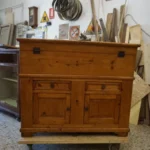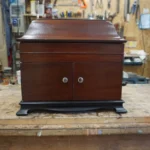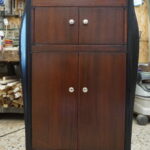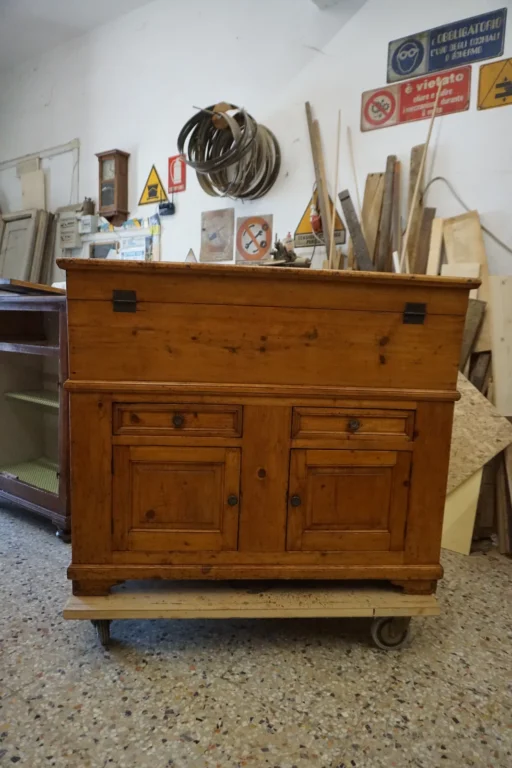
When it comes to restoring an antique bread chest, the process always begins with a question: what do we want to remove, and what do we want to preserve? In this article, we show you, through photographs, how a bread chest that arrived at our workshop in Calcinaia, in the heart of the Chianti Classico region, has changed. It was dark, wrapped in plastic film and difficult to recognise. Today, the wood is visible once again.
What is a bread chest, and why is it worth restoring?
The bread chest is a traditional Tuscan piece of furniture originally designed for kneading and storing bread. It has a hinged lid that opens onto a deep compartment, with drawers and cupboard doors underneath to keep kitchen essentials organised. It was made to be used every day, and it shows: the wood bears the marks of the hands that have opened and closed it for years. This is precisely why a bread chest is well suited to conservation restoration, a process that respects these marks rather than erasing them.
Antique bread chest restoration: what it looked like when it arrived at our workshop
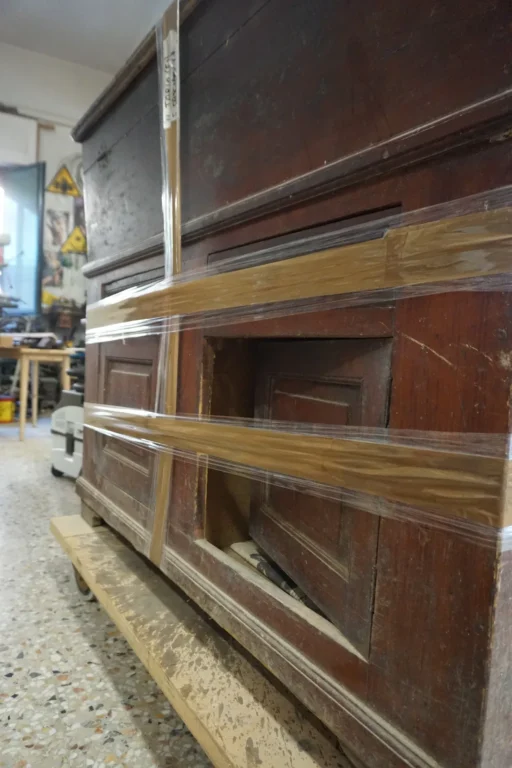
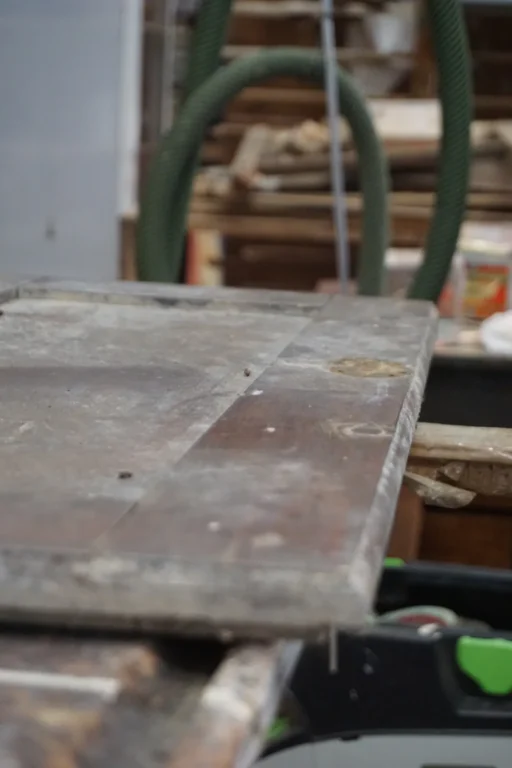
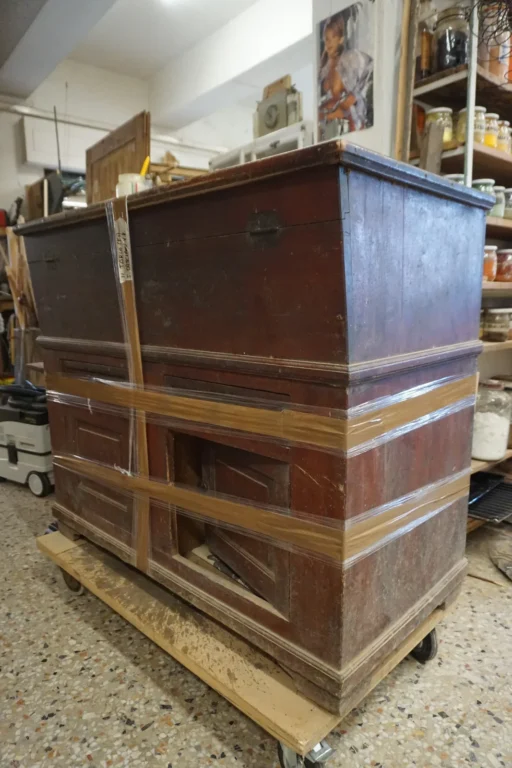
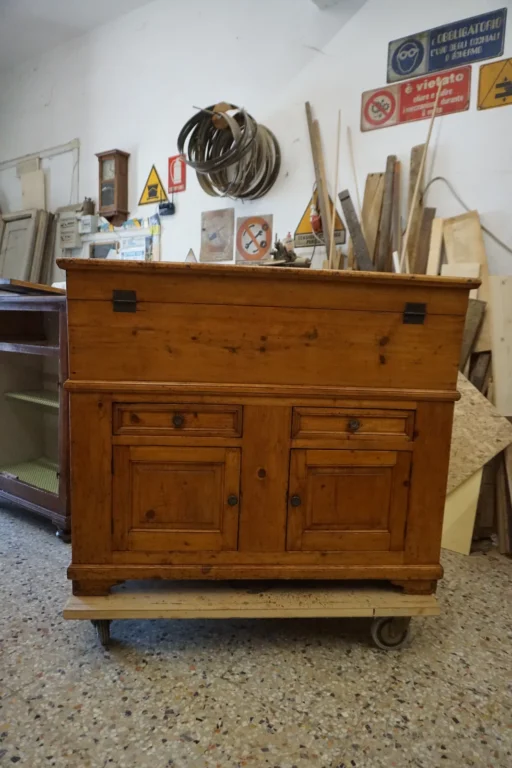
**The bread chest arrived wrapped in transparent plastic film and adhesive tape, resting on a wheeled platform. Beneath the plastic, the wood was dark, and the surface showed scratches and signs of age. Even the details were concealed: one of the boards forming the top was still grey with dust and old residue, and the wood’s original colour was impossible to see. It was a difficult piece of furniture to read.
Before touching anything, we take the time to look. We examine the piece up close, understand how it was made, and carefully decide where to begin. Wood has its own pace, and we respect it.**
What is conservation restoration?
Conservation restoration does not erase a piece of furniture’s history: it removes what hides it and preserves what tells its story. It is not about remaking the piece. A bread chest restored in this way does not become “like new”; its original character becomes visible again.
What we removed
We removed the layers that concealed the wood, bringing its warm colour and natural grain back into view. This is the most noticeable change, and it is clearly visible when comparing the before-and-after photographs.
What we preserved
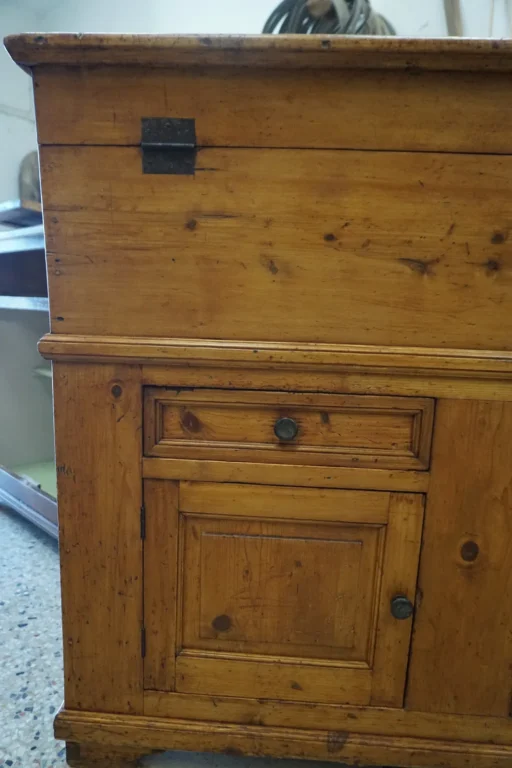
The wood’s knots, small dents, signs of wear along the edge of the top and original iron hardware have all been preserved, including the hinges and knobs. These details make this bread chest a unique piece, and we chose not to hide them.
Antique bread chest restoration, before and after: a closer look
The front
Today, the front reveals the lid, two drawers and two panelled doors. The wood grain and knots are clearly visible, and the colour is once again the warm tone of exposed wood, no longer hidden beneath a dark finish.
The top and its edges
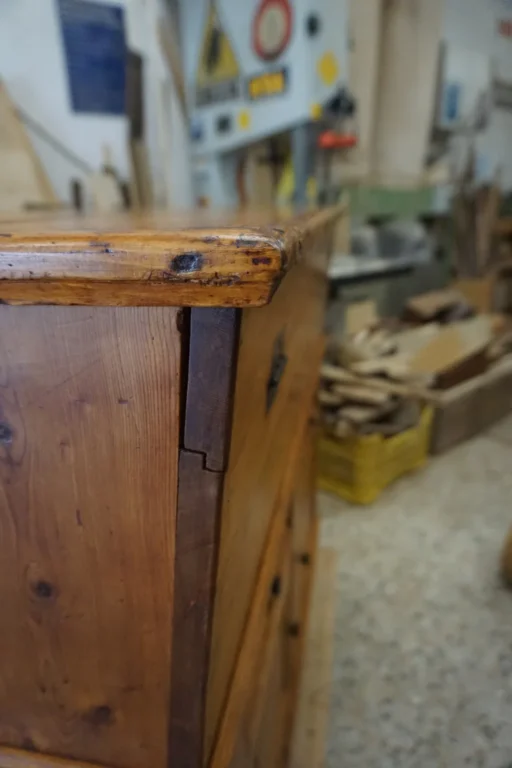
The edge of the top still bears the marks of time: it has been cleaned, not remade. The small knocks and the shape worn down through use are still visible, giving the piece its authentic character.
The lid and interior
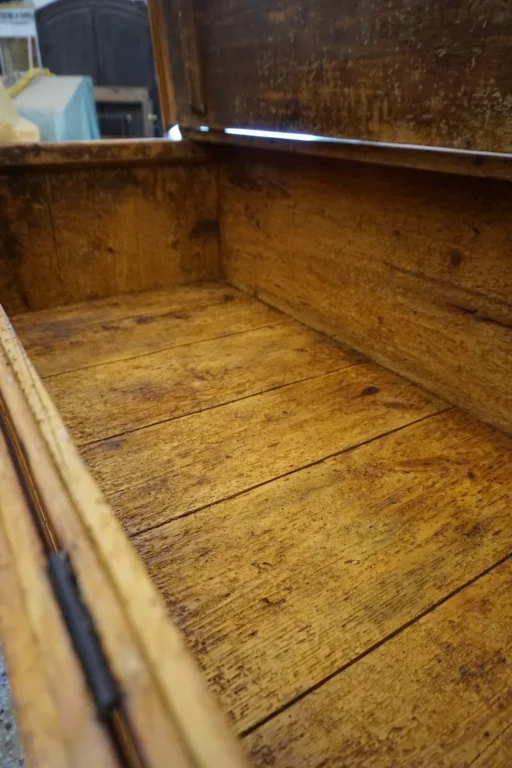
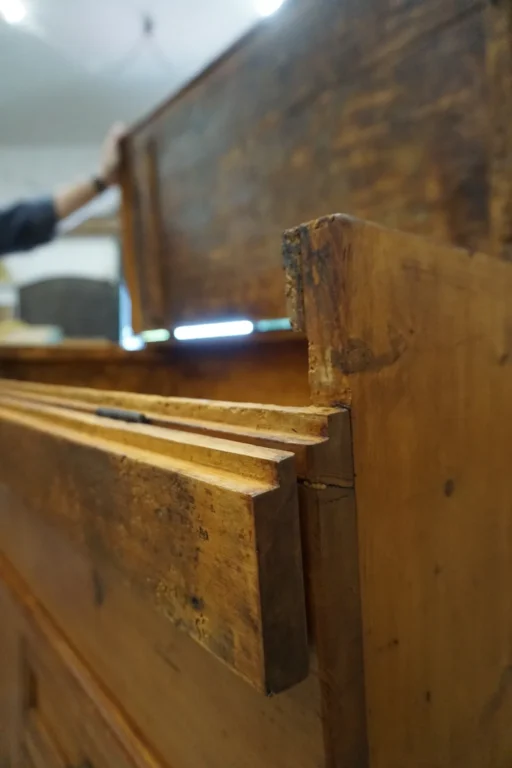
Opening the lid reveals the hinges and the boards of the top up close. Inside, the base is made of wooden boards, complete with their natural grain and joints: no imitation, just the material itself.
When is conservation restoration the right choice?
Conservation restoration is the right choice when:
-
The piece is a family heirloom, and you want it to retain its original character.
-
You appreciate the knots, grain and signs of wear in the wood.
-
You want a piece that does not look brand new but can once again be used every day.
If, instead, you want to change the furniture’s appearance, colour or even its function, the project falls under artistic restyling. It is a different kind of work, carried out with the same attention to detail, and we decide together how to approach it.
Antique furniture restoration in Chianti: how we work
**It all starts with a conversation and a few photographs of the piece: how it is made, where you found it and what you would like it to be used for again. Then we decide together what to remove and what to preserve.
At our workshop, Giacomo and Michele work on each piece. They are brothers, woodworkers and artists. The work is done by hand, with all the time it needs: good restoration cannot be rushed.**
Frequently asked questions about restoring an antique bread chest
How much does it cost to restore an antique bread chest?
It depends on the condition and dimensions of the piece, as well as the amount of work required. That is why we do not quote prices without first seeing the furniture. Send us a few photographs or visit our workshop, and we can discuss the project.
How long does the restoration take?
It depends on the piece. Conservation restoration takes time and cannot be rushed: the wood needs to be examined, cleaned and finished carefully.
Does conservation restoration erase the signs of age?
No. The knots, dents and original hardware remain. We only remove what conceals the wood.
Can I see other projects you have completed?
Yes. You can explore our work on giakkemikke.com, and you can also see our pieces in person at the workshop by appointment.
Visit our workshop
If you are looking for antique bread chest restoration in the Chianti region, or you have another piece of furniture that simply needs a closer look, come and visit our workshop by appointment. Seeing and touching the wood in person is the best way to understand what can be done.
-
GiakkEMikke · Via Grevigiana, 23A, 50026 Calcinaia (FI), Italy
-
Phone: +39 339 619 0379
-
Opening hours: Monday–Friday, 8:00 am–12:30 pm and 2:00 pm–7:30 pm; Saturday, 8:00 am–1:00 pm; Sunday, closed
-
Website: giakkemikke.com · Online shop: giakkemikkeshop.it