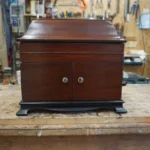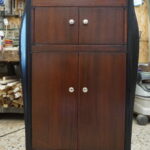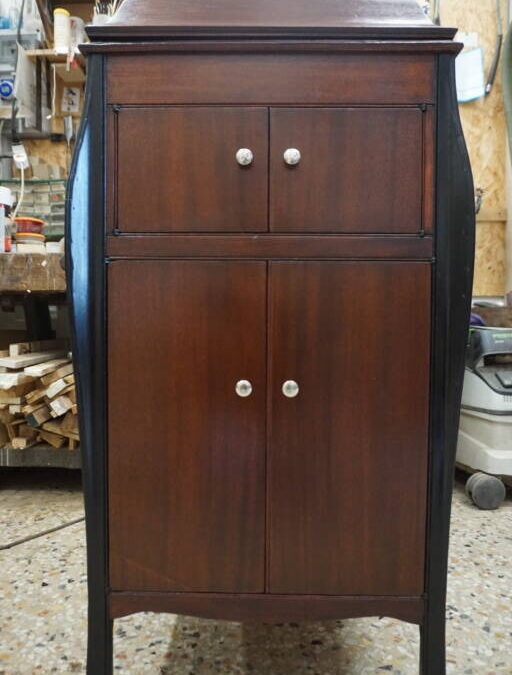
The restoration of a 1921 Victrola VV-80 gramophone requires a multidisciplinary approach: restoring the mahogany cabinet, completely overhauling the spring motor, rebuilding the sound box, and restoring the metal finishes. In this restoration journal, we document step by step the recovery of an original example (serial number #46881) produced at the Victor factory in Camden, New Jersey, and brought back to playing condition just as it did more than a century ago.
In the early 1920s, the gramophone was not simply a music player, but the beating heart of the living room and a true piece of furniture. The Victrola VV-80, introduced by the Victor Talking Machine Company in 1921, embodied this philosophy: a cabinet-style model that combined period craftsmanship with finely engineered mechanics.
What Is the Victrola VV-80?
The Victrola VV-80 is a cabinet gramophone manufactured by the Victor Talking Machine Company starting in 1921 at its Camden, New Jersey, factory. It plays 78 rpm records using a mechanical spring motor, with no electrical power required.
The example that arrived at the workshop bears serial number #46881, placing it in the final months of 1921, during the very first year of production of this model.
The original guidelines recommended that the needle be positioned at a precise 60-degree angle relative to the record in order to prevent premature groove wear. For more demanding listeners, Victor offered Tungs-tone tungsten needles, capable of playing hundreds of records without requiring replacement after every listening session, with an exceptional tonal purity for the period.
The Condition of the Gramophone Before Restoration
Time is unforgiving to wood and precision mechanics. The example showed clear signs of age and, above all, moisture damage: lifted veneer, deteriorated finish, a motor seized by hardened grease, and a sound box no longer capable of vibrating properly. The goal of the restoration was to strike a delicate balance between historical preservation and functional restoration.
The Restoration Step by Step
1. Cabinet Restoration and Shellac Finish
Structural consolidation: The original mahogany veneer that had lifted or weakened due to moisture was completely re-glued to restore stability to the cabinet.
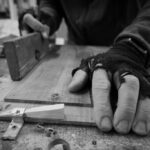
Wood reconstruction: Missing or irreparably damaged sections were rebuilt from scratch using mahogany inserts and inlays carefully matched for grain and color.
Stripping and refinishing: The old, dull finish was removed, and the wood was refinished using the technique of choice in the 1920s: hand polishing with shellac, creating a warm, deep and mirror-like surface.
2. The Spring Motor and Speed Control
Disassembly and degreasing: The motor assembly was completely disassembled. The winding springs were removed from their barrels, thoroughly degreased, and freed from residue and hardened grease.
Lubrication: The springs were re-greased with specialized products, and all friction points and gears were lubricated.
Governor adjustment: The three-ball governor and felt brake were calibrated to eliminate speed fluctuations and ensure stable playback at 78 revolutions per minute.
3. Sound Box, Nickel Plating and Turntable Felt
Sound box overhaul: The sound box was completely disassembled, with the hardened gaskets, rear damper, and deteriorated mica diaphragm replaced to restore clarity and brilliance to the sound.
Metal finishes: Nickel-plated components that were still in good condition were polished, while those that were too severely deteriorated were restored to their original factory condition through electroplating and re-nickeling.
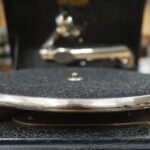
Turntable felt: The old covering was replaced with new green felt faithful to the original period color.
The Result: A Voice from 1921 Sings Again
Restoring an object from 1921 does not simply mean “fixing it”; it means preserving a piece of technological and musical history. Today, this Victrola VV-80 is playing again: the motor runs quietly, the mahogany shines beneath the shellac finish, and as the needle is placed into the groove, the voice of the past can once again be heard with clarity and charm, just as it was more than a century ago.
Frequently Asked Questions About Victrola VV-80 Restoration
What year was the Victrola VV-80 produced?
The Victrola VV-80 was introduced by the Victor Talking Machine Company in 1921 at its Camden, New Jersey, factory.
How fast does the Victrola VV-80 play?
It plays at 78 revolutions per minute using a mechanical spring motor, with no electrical power required.
What needles did the Victrola VV-80 use?
It used traditional steel needles and, for greater durability, Tungs-tone tungsten needles, capable of playing hundreds of records without requiring replacement.
What does a complete restoration of a spring-driven gramophone involve?
It includes restoration of the wooden cabinet with a shellac finish, a complete overhaul of the spring motor and governor, rebuilding of the sound box, and restoration of the metal finishes and turntable felt.
Can a restored Victrola gramophone still be used?
Yes. With the sound box overhauled, the motor properly lubricated, and the governor calibrated, the machine can be fully restored to working order and play 78 rpm records with stable speed.